

Share This Story
I’ve lost count of how many people have told me they loved their sofa in the showroom and hated it six months later. Not because it suddenly looked bad, but because it didn't work for their life in the way they expected, and that’s why it’s so important to understand how to choose a sofa that actually fits your life.
It’s always the same old issues that cause frustrations, from the sofa being too deep to sit on properly, too firm to relax on, or too fragile for pets, kids or any spills. Or sometimes, it’s just that its proportions don’t fit your space well enough and though you can’t quite put a finger on it, something just never looks right.
If you’ve ever been unfortunate enough to experience any of these issues, you’ll know how quickly your sofa ends up becoming something you avoid. What’s worse is by the time you realise that your sofa doesn’t work for you, replacing it feels too expensive and exhausting to even think about.
This guide is built around the decisions that matter before aesthetics, to help you to choose a sofa that you’re excited to come home to.
Decide What You Actually Use Your Sofa For
Before you start with taking measurements, ordering fabrics, or opening as many tabs of stylish sofas as humanly possible, it’s important to start by asking yourself, what happens on this sofa on most days? Most sofas end up being used for one of four things which include:
- Sitting and talking – mainly sitting upright, especially if you usually have guests over
- Lounging and watching TV – usually laying down, slouching or stretching
- Multi-use family life – pets and kids and therefore plenty of spills, climbing and the sofa being used in every way it’s not supposed to be
- Occasional use – a formal living room that is barely used
A lot of sofas can’t cater to all of these at the same time, because the depth, height, cushioning and fabric nearly always force tradeoffs, so deciding on how you use your sofa allows you to understand what’s most important to you, helping you to refine your search.
If you skip this step, you’ll end up choosing based on what you think looks good, which won’t save you when your back is in pain or your cushions end up collapsing.
Judgement call
- If your sofa is mainly for sitting, choose sofas that have firmer cushions and seats that aren't too deep to ensure you can sit comfortably
- If you usually use your sofa for relaxing and watching TV then you should go for deeper seats and softer backs since you’ll likely spend a lot of time lounging. A reclining sofa can also work well for you
- If it needs to survive children, pets and daily wear, prioritizing sofas that use durable fabrics becomes a non negotiable
Choosing the Right Sofa Depth
Choosing the right seat depth is a decision that is often overlooked, yet it’s actually one of the main reasons your sofa can feel ‘wrong’ even if everything else is fine. I’m reminded of this when I think back to my second adult sofa purchase – I admit that I pretty much only cared about what it looked like and learned the hard way when I realised the only way I could ever sit on it was by piling cushions behind my back because of how deep it was.
As a rough guide:
- Shallow seats (20-22 inches) – make it easier to sit upright and are better for conversation and smaller rooms, though they are less forgiving when it comes to lounging
- Standard seats (22-24 inches) – allow for both a balance of comfortable sitting and relaxing too which is the safest option if you’re unsure
- Deep seats (24+ inches) – are designed with lounging in mind and can feel uncomfortable without cushions. Deep seats also aren’t the best choice for small living room as they end up overwhelming the space
Judgment Call
- If you’re under 5’6 like I am, deep seats can get annoying and your sofa can become basically unusable
- If you never cross your legs, sprawl out, or lie down on your sofa then a sofa with depth won’t really matter much to you
Deciding How Firm Your Sofa Should Be
Most of us sit on a sofa for thirty seconds in a shop and gravitate toward the softest one. It’s no surprise either, because those thirty seconds feel like heaven especially after you’ve been walking around for so long. Don’t mistake that immediate comfort for quality because in reality softness feels good at first, but loses shape faster and offers less support for daily sitting, while firmness feels good over time.
Medium-firm sofas don’t feel that impressive initially but start to become comfortable after us, while also holding its structure for longer. If you plan to sit on the sofa every day, slightly firmer is almost always the better long-term choice.
Choosing the Right Sofa Size for Your Room
It's easy to buy a sofa that's one size too big and the logic is understandable, because of course you’d want your sofa to take up a good amount of space in your living room. The issue is that it’s easy to get this wrong and sofas that are too big make rooms harder to move through, harder to rearrange and also harder to live in. A slightly smaller sofa with space around it always feels calmer and more intentional than a sofa that barely fits.
Before even choosing a size, start by measuring three things:
- The wall length – leave at least 8-12 inches between the sofa and the wall so it doesn’t end up feeling cramped
- Your walkways – in the gaps people move through, so between the sofa and coffee table, or the sofa at TV unit, there should be at least 30 inches so that fitting through doesn’t become awkward or a tight squeeze
- Your doorways and stairs – don’t underestimate how much of a pain it can be to order a sofa that can’t get past your front door. Measure the height and width of every doorway the sofa will pass through, also checking for tight corners on stairs if you live in an apartment.
Choosing a Sofa Fabric That Fits Real Life
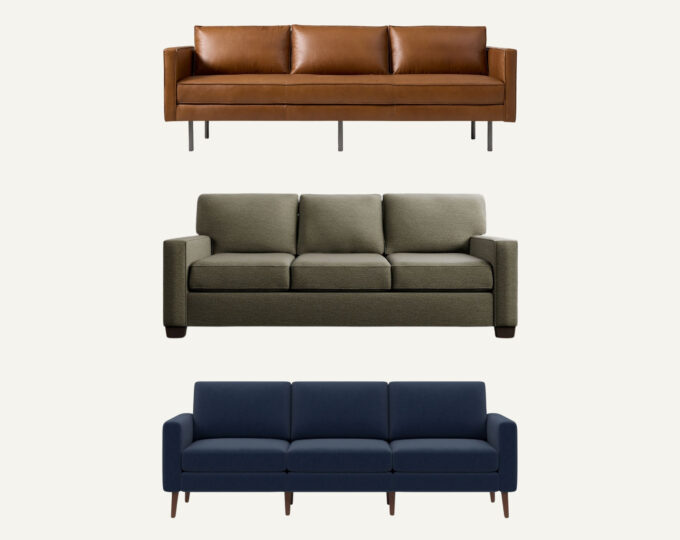
The fabric that you choose has a big impact on how your sofa looks and how durable it is, so you need to make your decision based on how you actually live. If you have a busy household, including kids and pets, leather and performance fabrics are the easiest to wipe down and the most resistant to daily wear. Full-grain leather in particular is the highest quality leather and it gets better with age rather than looking worn – we’ve rounded up a list of the best leather sofas to help you pick.
For households that aren’t busy or full of kids and pets, you can consider linen and cotton, which gives a relaxed and lived in look although they mark and crease more easily, making them more suitable for low traffic rooms.
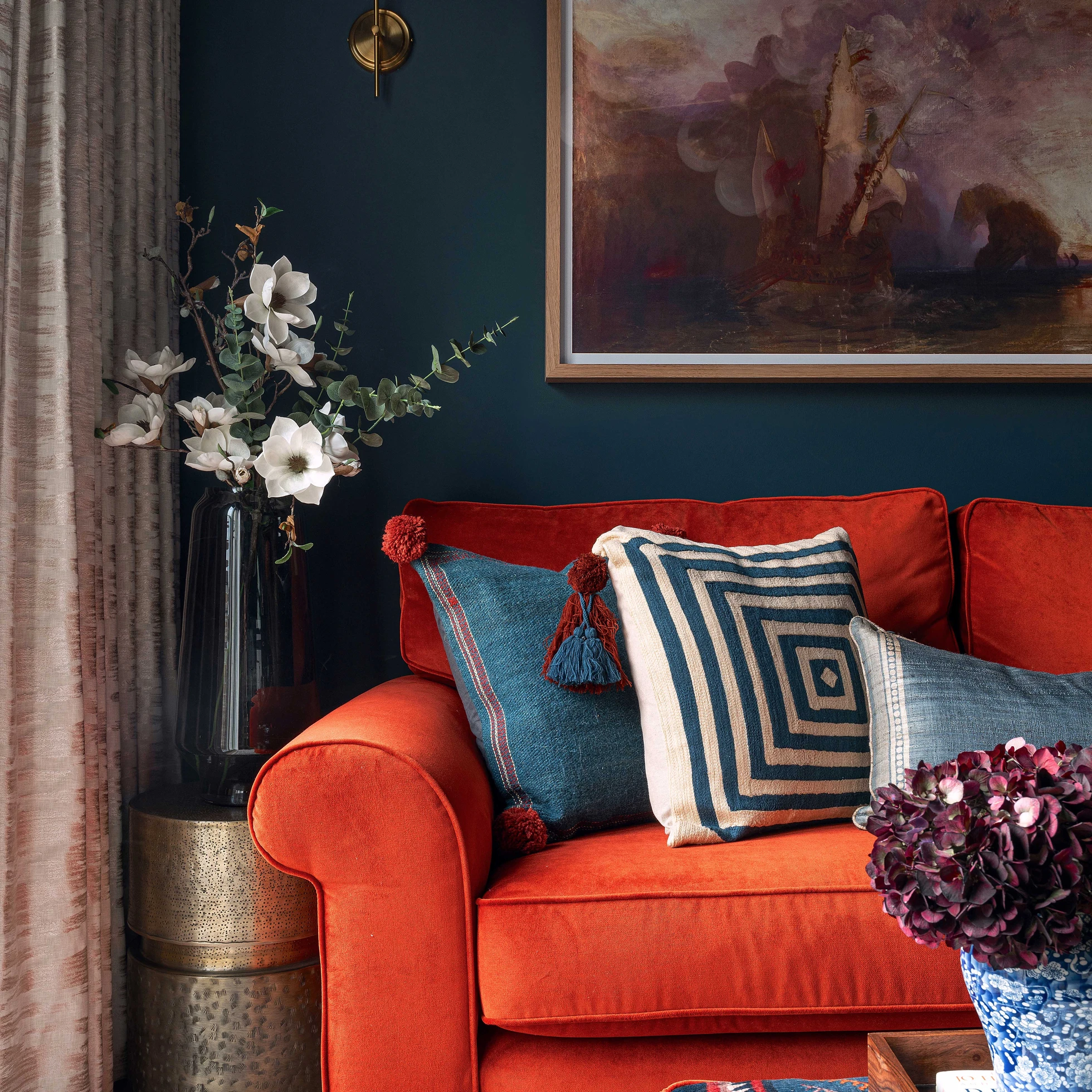
Velvet is also worth considering, not only can it be durable but it also adds warmth and depth to a space in a way most fabrics don’t.
A few practical things to be aware of before you commit to your sofa: look for a rub count (called a Martindale rating) of at least 25,000 if you need your fabric to withstand normal everyday use, and 40,000+ if you want to choose a fabric that will hold up well to heavy use.
You should also check the cleaning code too – W is for ‘water’ and means that you can use water–based detergents or water and soap to clean your furniture which works well for families, S is for ‘solvent’ meaning you have to clean using non-diluted solvent (water-based cleaning can cause damage), SW is for solvent or water meaning you can use both water and solvent cleaning methods and anything marked X is professional clean only. Always spot clean in an inconspicuous area of your sofa first to check that your chosen cleaning solution doesn’t cause discoloration.
Last of all, if you’re buying online, make sure to always order fabric swatches first because it’s hard to properly judge colors and texture based on how they look on screen, so you’ll want to get an idea of how it’ll work in your space.
How Style Should Support Your Sofa Decision
Once you’ve thought about all the practical decisions and decided what works for you, that’s when you can finally move on to the fun part, which is thinking about how you want your sofa to look. By this point, your options will already be narrower, which is a good thing because having fewer choices will enable you to make better decisions.
When you’re browsing for a sofa, the style that you choose should balance the room and compliment the furniture you already own. This doesn’t mean that it has to match anything that you already have, but it just needs to work in the space. The style also needs to set the tone so think about the vibe you’re going for, whether that is formal, relaxed or somewhere in between.
When you choose the right sofa, it quietly supports your life and almost disappears into daily use which is pretty much the entire point, and once you understand how to choose, buying becomes less confusing and more intentional.

When our world experiences profound changes we look to what people have been through in the past. By surveying your competitors, you will not only be able to figure out which audience to target.