


Share This Story
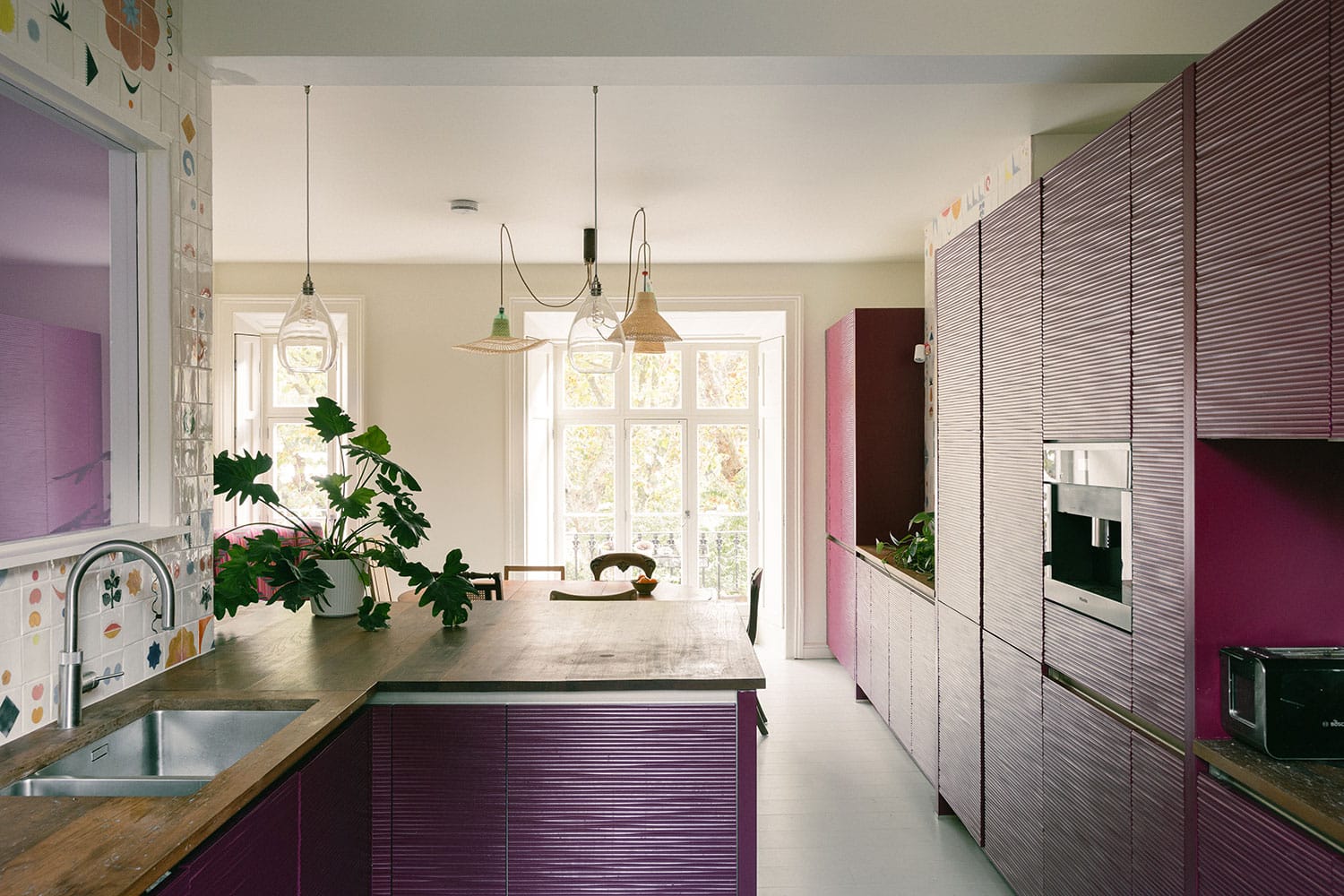
When designer Leo Wood first walked into this South London kitchen, she was greeted by magenta cabinets, mock-Roman mosaic floors, and a ceiling packed with recessed lights. It was loud, a little chaotic, and full of potential. Her client, a climate-change scientist with a love of bold color and a firm no-demolition mindset, wasn’t looking for a blank slate.
She wanted a renovation rooted in sustainability and creativity. That meant keeping the cabinets, salvaging materials, and leaning into what was already there. The result is a kitchen that feels entirely new without tossing out the old, a joyful, layered space where every detail has a story. We caught up with Wood to learn how she brought this bold, sustainable transformation to life.
What was your reaction when you first saw the kitchen?
I was amazed by quite how mad the design was - bright magenta synthetic cabinet fronts, with marble worktops and orange mosaic floor tiles is quite a look! But the room itself is up on the first floor with a lovely dual aspect, so the space had loads of potential, it just needed a major cosmetic overhaul.

Before
Sustainability was a core part of this project. How did that influence your design decisions?
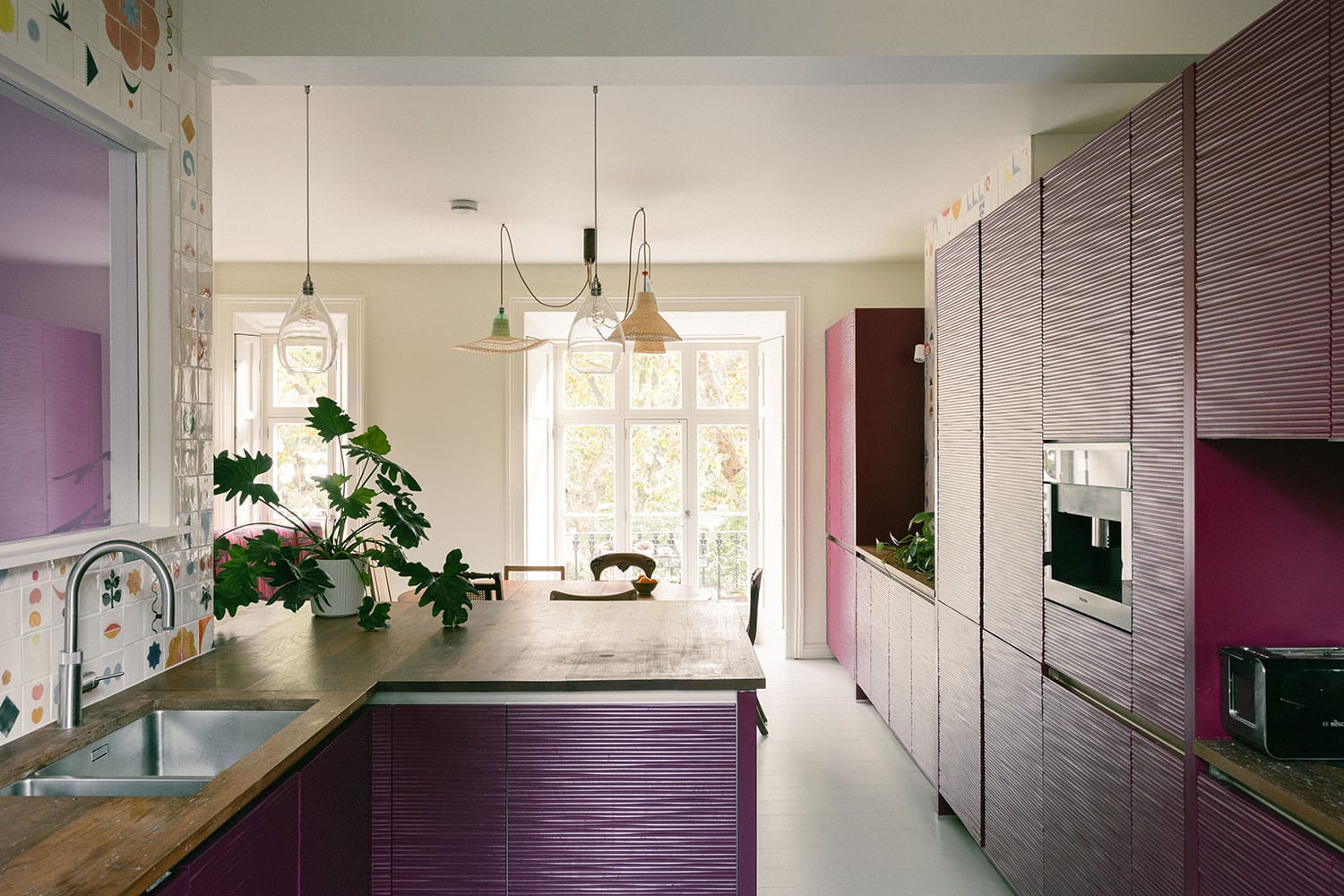
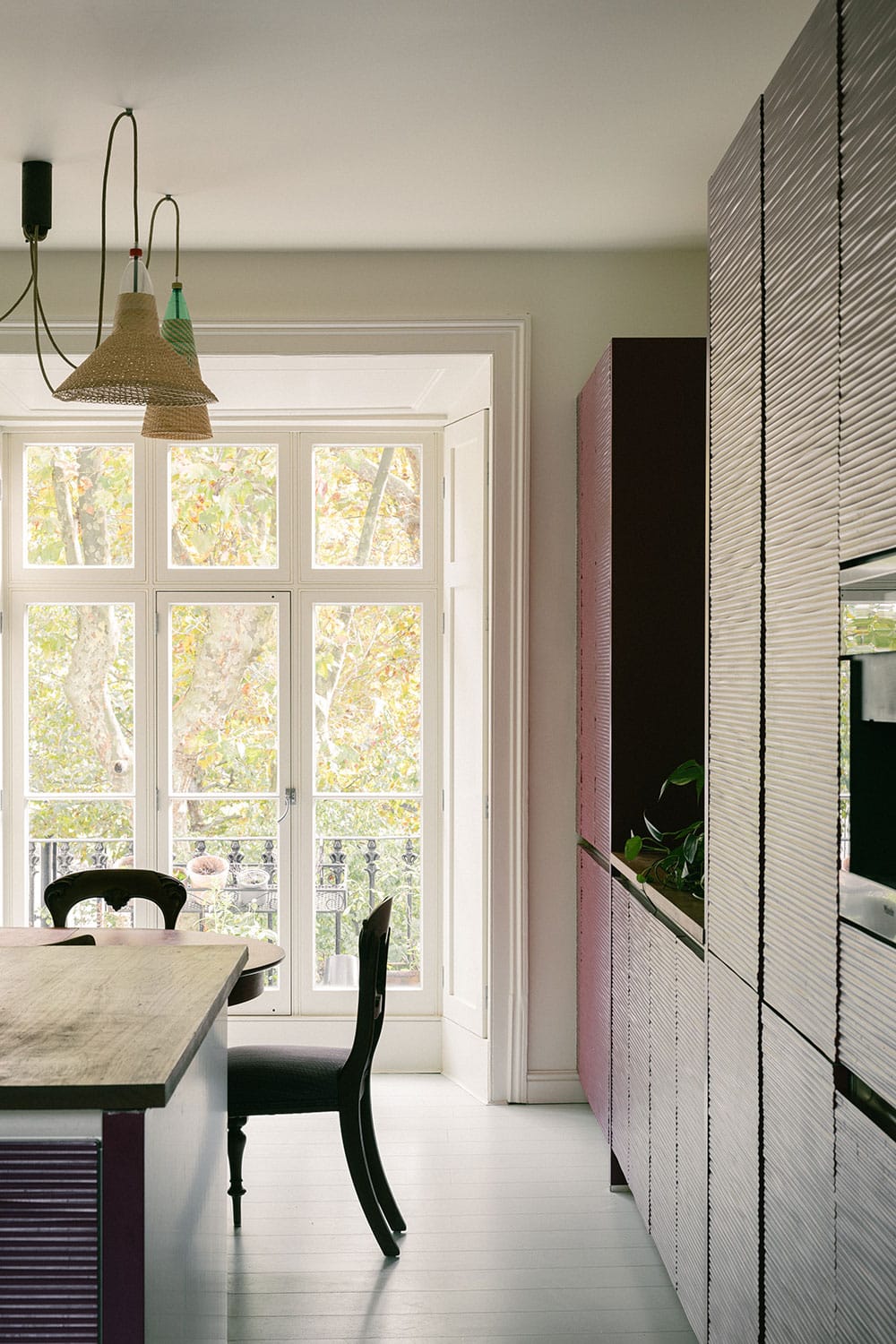
All our decisions were made with sustainability in mind - and in some cases this meant doing less and not more. We fashioned reclaimed teak slabs from Retrouvius for the kitchen worktop, and instead of ripping up the tiled floor, we painted over it with a hard wearing floor paint.
You managed to preserve the original cabinetry. How did you make it feel fresh and intentional?
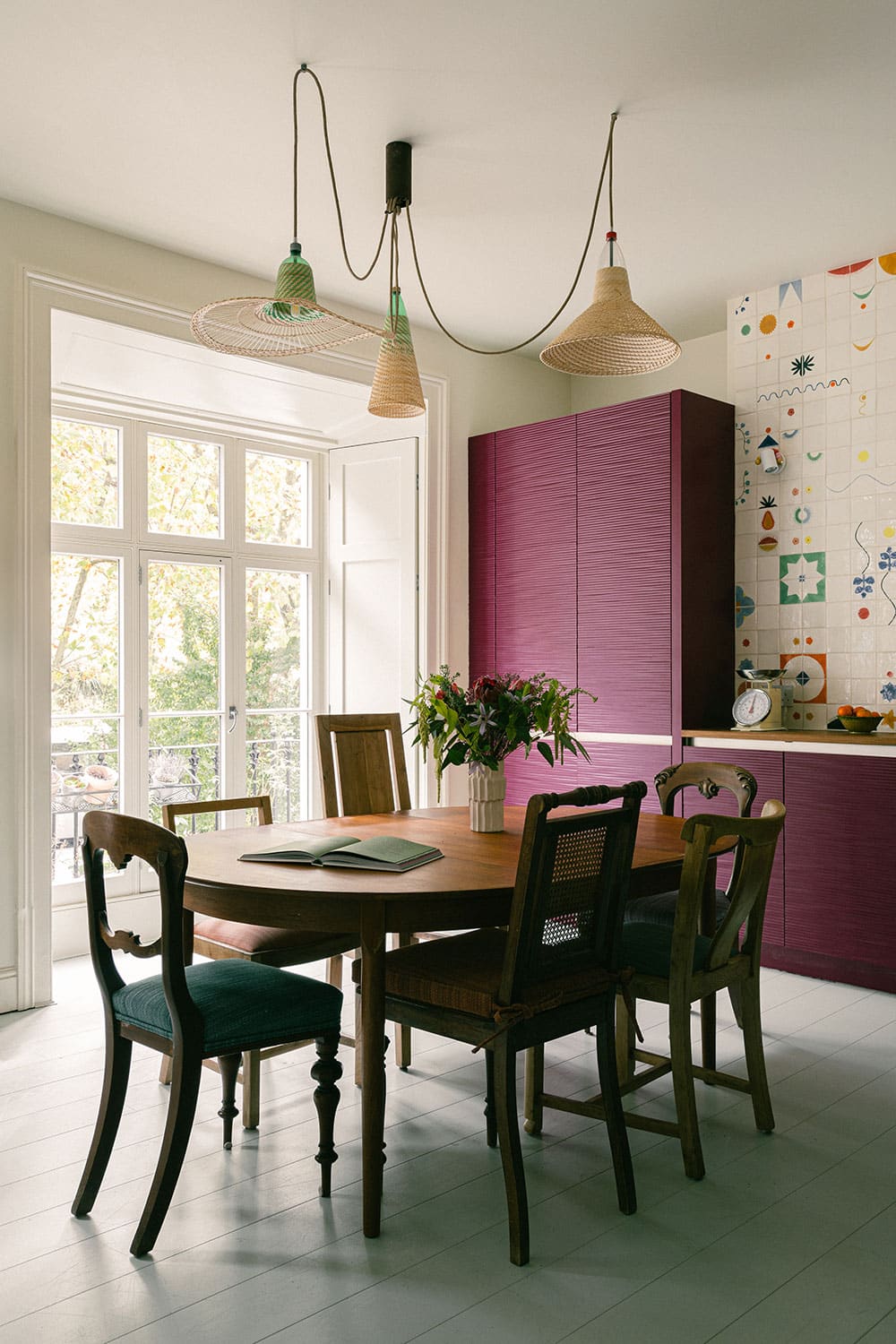
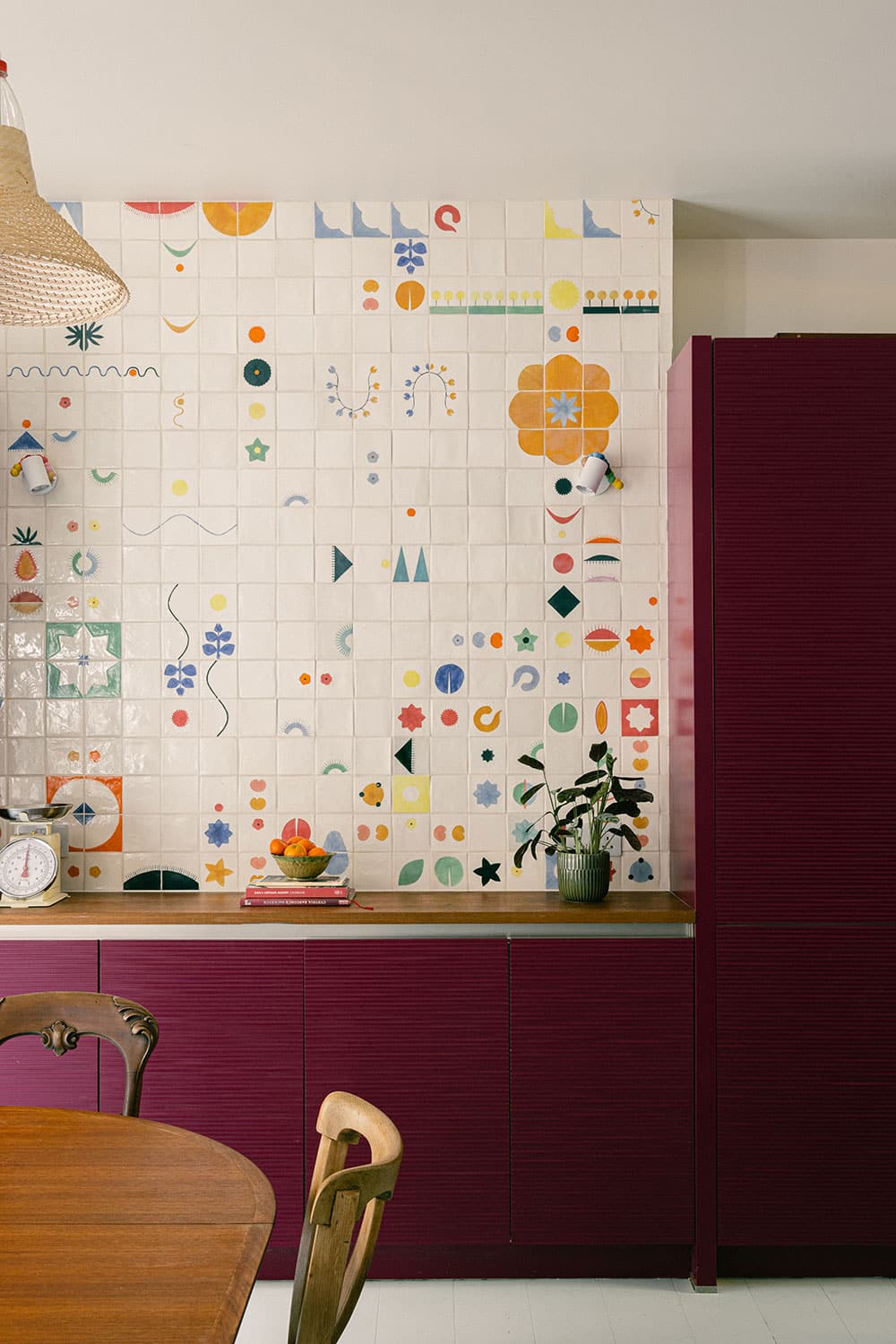
I think that by changing all the materials and colours that were sitting alongside the magenta cabinets that we could shift the perception of these cabinets - making them seem bold and artistic, rather than garish. A key factor in this shift is the bespoke colourful tiles that we commissioned from architectural ceramicist Charlotte Moore.
Tell us about the custom backsplash - it’s a showstopper. What was the story behind that?
Our client loved vibrant colours, and I knew that the idea of creating a one of a kind ceramic artwork in her kitchen would really appeal to her. She had shown me a reference image of some colourful kitchen tiles that were completely random in their scale and pattern and I took this original concept to Charlotte Moore, who then developed her own response to the brief, and developed individual tile designs based on images of pollen as seen under the microscope. Charlotte and I worked together on the colour palette, which we knew needed to work with the magenta cabinets, and be vibrant but without being garish.
What design moment in the kitchen are you most proud of and why?
Well it would have to be the kitchen tiles as they are completely unique and it is rare to be able to work with a client who is happy to make such a cost and time investment in such a fun interior element.
What do you hope people take away from this project beyond the aesthetics?
I think that before someone rips out an old kitchen, bathroom or any interior fitting, to just ask themselves whether they can find a way to reuse elements of those spaces, and perhaps by just changing one or two elements in those rooms, that they can still transform a space without having to rip it out and start again! It is certainly more sustainable to be working like this, but perhaps it is also more creative and exciting too.
Looking back, what do you think this renovation says about your design philosophy?
I think the kitchen design for our Waterloo project reflects that I am a resourceful interior designer, as I am good at working with what is already in a space and making the most of it. But I think being “resourceful” is not a very sexy idea, as sometimes it involves restraint, and doing less. But I feel that I can offer creative solutions to challenges, and create unique spaces within any parameter, even if a project budget is tight.

When our world experiences profound changes we look to what people have been through in the past. By surveying your competitors, you will not only be able to figure out which audience to target.